Views: 142 Author: Site Editor Publish Time: 2026-01-07 Origin: Site
For retailers and distributors, few things destroy profit margins faster than "dead stock." When you import thousands of writing instruments, you are not just buying plastic and metal; you are investing in a chemical promise. If that promise fails before the product reaches the customer's hand, your brand reputation evaporates alongside the solvent. The reality is that ink is a complex chemical suspension subject to evaporation, sedimentation, and biological degradation. It is not merely a colored liquid but an engineered system that requires rigorous defense against time and environment.
This guide moves beyond generic marketing claims to expose the specific engineering protocols necessary to validate quality. We will transparently outline the stability tests—from accelerated aging chambers to drop-impact simulations—that ensure every unit performs flawlessly. You will learn exactly how we verify Writing Instrument Stability, protecting your inventory from the hidden costs of premature failure.
Science-Backed Aging: We utilize Arrhenius-principle accelerated aging (heat chambers) to predict multi-year shelf life without guesswork.
Compliance is Non-Negotiable: All batches meet ISO 12757 and reach compliance standards for toxicity and safety.
Real-World Simulation: Beyond lab metrics, we test for "forgotten in car" scenarios and drop impact resistance.
Wholesale Evaluation: A checklist for procurement managers to verify ink quality before bulk acquisition.
To guarantee longevity, we must first respect the delicate balance of ink chemistry. A high-quality ballpoint or gel pen relies on a suspension that must flow freely when agitated by the ball but remain static when stored. This paradox requires precise control over viscosity, biological purity, and solvent retention.
Viscosity is the measure of a fluid's resistance to flow, and it is the primary predictor of how a pen behaves over time. If the ink is too thin, it leaks or bleeds through paper. If it is too thick, the pen "skips" or requires excessive pressure to write. We do not rely on a single measurement; instead, we employ rotational viscosity testing across a temperature spectrum—typically 30°C, 40°C, and 50°C.
By testing at elevated temperatures, we simulate the thinning effect that occurs during summer shipping or storage in non-climate-controlled warehouses. This ensures the ink maintains its transfer efficiency without becoming runny. A stable formula demonstrates a consistent thixotropic curve, meaning it liquefies instantly under the friction of the rolling ball and solidifies immediately upon hitting the paper. This balance is critical for preventing the "railroading" effect, where ink splits into two parallel lines, a common sign of poor flow stability.
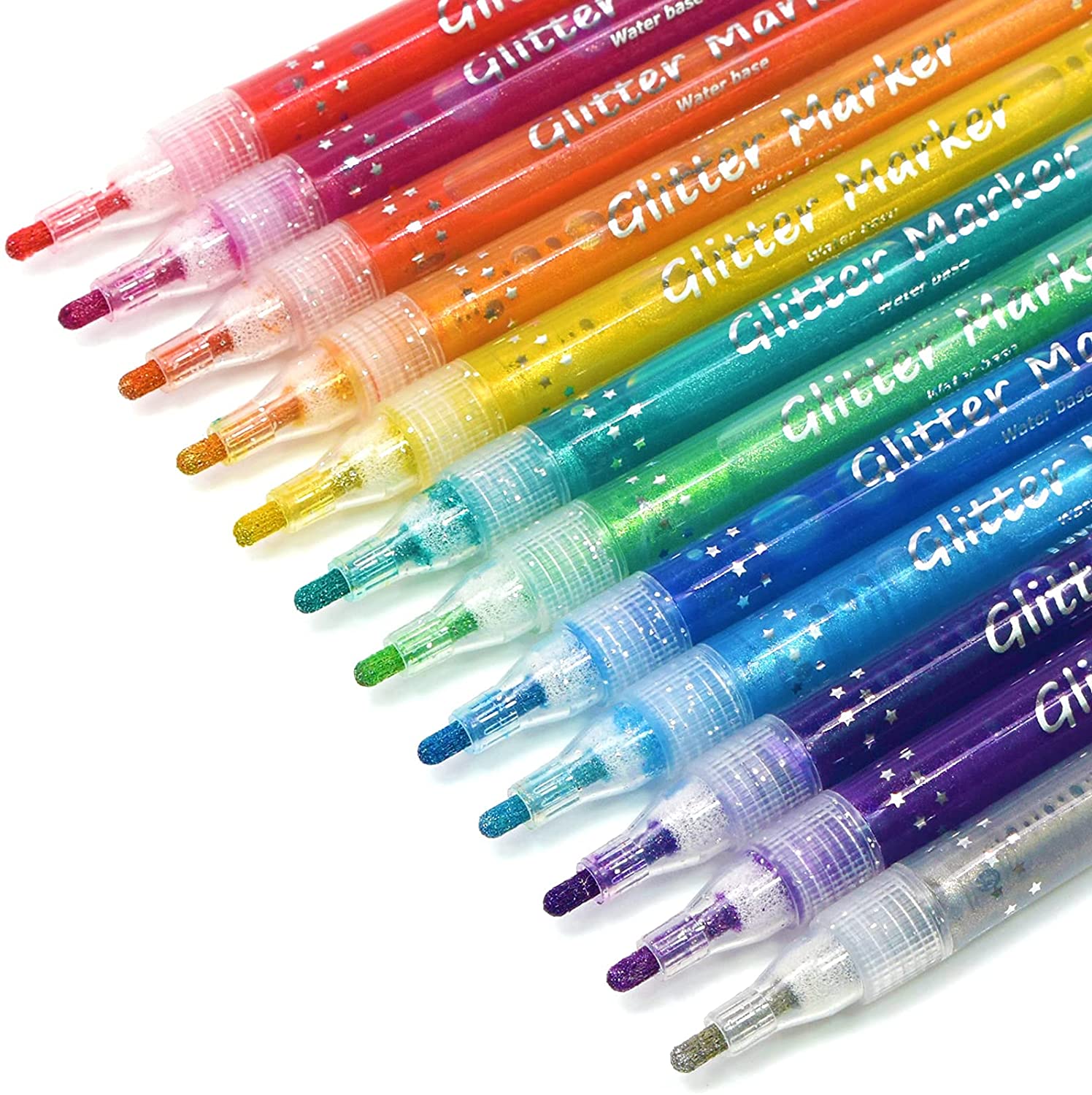
One of the most overlooked threats to ink stability is biological contamination, often referred to in the industry as "SITB" (Slime in the Bottle). Water-based inks, such as those used in gel pens, are particularly susceptible to fungal growth. If fungal spores enter the reservoir during manufacturing, they feed on the organic components of the ink, creating a sludge that eventually blocks the tip.
To combat this, we enforce strict sterility protocols during the filling process. We treat formulations with broad-spectrum biocides that neutralize bacteria and fungi without altering the ink’s color or acidity. Regular batch testing ensures that even if a pen sits on a shelf for two years, the internal environment remains sterile and fluid.
Even the most chemically perfect ink is useless if the solvents evaporate. We rigorously test the seal integrity of the entire system, focusing on the junction between the tip and the tube, as well as the cap's air-tightness. Our standard "Cap-off Time" testing measures how long a pen can remain uncapped before it hardens. High-quality resins and tight manufacturing tolerances reduce solvent loss, ensuring that the first stroke writes as clearly as the last.
For procurement managers, international standards serve as a non-negotiable "floor" for quality. If a manufacturer cannot certify adherence to these global benchmarks, the product represents a significant liability risk. We view these not as targets to hit, but as baseline requirements for market entry.
| Category | Standard | What It Guarantees |
|---|---|---|
| Performance | ISO 12757-1/2 | Global benchmark for ballpoint pens. Defines writing quality, leak resistance, and archival stability (resistance to fading/water). |
| Safety (Physical) | ISO 11540 | Cap safety standards. Ensures caps allow airflow to prevent suffocation if accidentally swallowed (anti-choking). |
| Chemical Safety | REACH & LHAMA | Certifies inks are free from restricted heavy metals, carcinogens, and reproductive toxins. Essential for EU/US markets. |
| Risk Assessment | TSCA / TRA | Toxicological Risk Assessments required for institutional buyers, schools, and government contracts. |
The ISO 12757 standard is the bible for ballpoint manufacturing. Part 1 covers general use, while Part 2 covers "documentary use," implying the ink must be resistant to bleaching, ethanol, and light. When we say a batch is ISO-compliant, it means we have verified its lay-down quality and resistance to leaking under standard conditions.
Compliance extends beyond performance to user safety. Regulations like REACH (in Europe) and LHAMA (in the US) dictate strict limits on hazardous substances. We verify that our inks are free from heavy metals and carcinogenic compounds. For institutional buyers, such as school districts supplying thousands of students, passing a Toxicological Risk Assessment (TRA) is often a legal requirement. Ensuring your wholesale pens meet these safety norms protects your company from legal action and recalls.
Laboratory formulas are perfect, but the real world is chaotic. A pen must survive drops, rough handling, and sporadic use. Our physical stress testing mimics the lifecycle of a writing instrument to identify mechanical weaknesses before they become customer complaints.
We do not estimate ink capacity; we measure it physically. Using automated plotting machines, we run pens in continuous circles until the reservoir is exhausted. This generates a precise "write-out length" in meters.
Crucially, we monitor for the "Skipping Threshold." It is unacceptable for a pen to write 2,000 meters if it skips constantly during the first 100 meters. Our protocols trigger an automatic rejection if line breaks or inconsistencies occur within the first 10% of ink usage. This guarantees that the end-user experiences immediate, smooth flow right out of the box.
A pen often falls off a desk before it runs out of ink. Our drop testing protocols simulate a fall from approximately 1 meter (standard desk height) onto a hard surface. We inspect two critical outcomes:
Tip Integrity: The tungsten carbide ball must not dislodge, fracture, or jam into the socket. A damaged tip results in scratchy writing or total blockage.
Housing Integrity: The barrel must be made of shatterproof polymers. Upon impact, the body should remain intact or, if sufficient force is applied, break cleanly without creating sharp, dangerous fragments.
For branded promotional products, the logo is as important as the ink. We test external durability using standard abrasion testers. The equipment rubs the barrel at a rate of roughly 42 cycles per minute under 2 to 4 pounds of pressure. This ensures that your company name or logo survives the friction of being tossed into bags, pockets, and drawers throughout the pen's lifespan.
Waiting three years to see if a product expires is not a viable business strategy. Instead, we use science to compress time. By understanding the chemical kinetics of our inks, we can predict Ink Shelf Life with high accuracy using accelerated aging techniques.
Our primary tool for prediction is the Arrhenius equation, a principle stating that chemical reaction rates roughly double for every 10°C rise in temperature. We place sample batches in controlled heat chambers incubating at elevated temperatures for specific durations. For instance, storing pens at 50°C for a few weeks can simulate months or years of aging at room temperature.
This data allows makers and buyers to forecast Total Cost of Ownership (TCO). If a test reveals that viscosity breaks down after the equivalent of 12 months, we adjust the formulation before mass production begins. This eliminates the guesswork and provides a verified "Best Before" window.
Pens are rarely stored in perfect conditions. They are left in cars during summer heatwaves and shipped in freezing cargo holds during winter.
The "Hot Car" Test: We expose units to temperatures exceeding 50°C to check for catastrophic failures like tube bursting or back-leaking. Heat causes air inside the tube to expand, pushing ink out; a quality follower gel (the clear goo at the end of the ink) must withstand this pressure.
Freeze/Thaw Cycles: Gel inks are water-based emulsions that can separate or coagulate if frozen. We subject pens to freezing temperatures and then thaw them to ensure the emulsion remains stable and the writing performance is unaffected.
Gravity is the enemy of stored ink. If a pen is stored "tip-up" in a cup for six months, gravity pulls the ink away from the ball. We perform recovery testing to verify that, even after prolonged improper storage, the pen writes immediately upon inversion. A quality feed system should re-wet the ball instantly without requiring vigorous shaking or "hard starting."
When you receive a shipment of wholesale pens, you cannot run them all through a mass spectrometer. However, you can use a practical "Five Senses" inspection to catch bad batches early.
Start with a visual check. Look closely at the refill tube. You should see a clear distinction between the ink and the follower gel. If the ink looks cloudy or separated, or if there is heavy sediment at the bottom near the tip, the suspension has failed. Next, use your sense of smell. uncapping a fresh pen might release a faint chemical solvent scent, which is normal. However, a "musty" or moldy odor is a red flag for biological contamination (SITB). This indicates the biocide failed and the ink is rotting inside the tube.
For large orders, always request a "Certificate of Analysis" (CoA). This document matches the specific batch you received to the lab results for viscosity and pH. Compare the "Date of Manufacture" codes on the packaging against the warranty claims. Fresh stock ensures you get the maximum shelf life for your distribution cycle.
Be wary of suppliers who cannot provide ISO certification documentation. Transparency is key. A reputable supplier should verify the origin of their ink base. High-quality German or Japanese ink bases generally offer superior stability compared to generic, opaque mixes. If the supply chain is a black box, the quality is likely a gamble.
Shelf life is not a matter of chance; it is a function of rigorous engineering. From the microscopic battle against bacterial growth to the physical resilience of the tungsten carbide tip, every aspect of a writing instrument must be tested to ensure reliability. By implementing strict protocols like Arrhenius aging and ISO compliance checks, we reduce the Total Cost of Ownership for our partners, eliminating the financial drain of dead-on-arrival inventory.
When you source your next batch of writing instruments, look beyond the price per unit. Request stability data. Ask about their stress testing standards. Ensure that the wholesale pens you buy are built to perform, protecting your brand's reputation with every word written.
A: Generally, a high-quality oil-based ballpoint pen has a shelf life of 2 to 3 years if stored correctly. Gel pens and rollerballs, which use water-based inks, typically have a shorter shelf life of about 1 to 2 years due to faster evaporation rates. Storage conditions, particularly temperature and humidity, significantly impact these estimates.
A: Extreme heat lowers the viscosity of the ink, making it thinner and more prone to leaking or bursting past the follower gel. Conversely, freezing temperatures can break the emulsion of gel inks, causing the water and pigment to separate permanently. This separation often renders the pen unusable even after it returns to room temperature.
A: While consumers use tricks like heating the tip, professional buyers should consider dried stock as expired. There is a distinction between a "dried tip" (clogged ball) and "expired ink" (solvent loss). If the solvent has evaporated from the main reservoir, the chemical balance is gone. Reviving it is temporary and unreliable; such inventory should be discarded to protect brand image.
A: ISO 12757 compliance guarantees that the pens meet strict international standards for writing quality. It ensures the pen will not leak under standard conditions, will provide a smooth line without excessive skipping, and, in the case of Part 2 compliance, has archival permanence suitable for legal documents. It is a verified badge of functional quality.