Views: 74 Author: Site Editor Publish Time: 2025-12-13 Origin: Site
A pen is often a low-consideration purchase until it fails—leaking in a pocket, scratching a client contract, or drying out mid-presentation. These moments of failure shift the focus from the writing content to the tool itself, often causing frustration and reputational damage. While many assume that high price tags equate to quality, the reality is far more technical.
"Premium" is not just about gold plating or brand heritage; it is a measurable engineering standard defined by tight tolerances, material purity, and rigorous stress testing. True quality manifests in the invisible details, from the chemical stability of the ink to the metallurgical composition of the tip. This guide deconstructs the manufacturing variables that separate mass-produced disposable writing instruments from investment-grade tools, providing a technical framework for procurement and evaluation.
Material Integrity: True premium pens utilize solid brass, CNC-machined resin, or sintered tungsten carbide, whereas budget options rely on thin-wall injection molded plastics.
The QC Gauntlet: High-end manufacturing involves destructive testing, including 10,000-cycle clip stress tests and simulated atmospheric pressure checks.
Ink Chemistry: Specialized pens (Micro Line, Whiteboard) require distinct chemical stability tests to prevent sedimentation and tip clogging.
Total Cost of Ownership (TCO): Higher upfront costs for premium manufacturing reduce replacement frequency and brand reputation risks associated with promotional product failures.
When sourcing writing instruments, buyers often evaluate samples based on visual appeal. However, the engineering definition of a premium pen focuses on mechanics and ergonomics. A Premium Pen Manufacturer prioritizes the physical interaction between the user and the tool, ensuring that the writing experience remains consistent over years of use.
The tactile experience of a pen is largely dictated by its weight distribution. Budget manufacturers often ignore this, resulting in products that feel insubstantial or unbalanced.
The Standard: Premium pens, particularly those crafted from brass or lacquered metal, are engineered to balance within strict ±2g tolerances. The center of gravity is positioned to rest in the web of the hand. This balance reduces the downward pressure required to write, preventing grip fatigue during long sessions.
The Failure Point: Inexpensive alternatives often suffer from poor cap design. When the cap is posted on the back, it creates a "tail-heavy" effect known as back-weighting. This forces the writer to grip harder to maintain control, leading to hand strain.
In manufacturing, tolerance stacking refers to the accumulation of small variations in part dimensions. If not managed, these variances lead to a product that feels "loose."
Fit and Finish: A critical area to inspect is the "step" between the barrel and the grip section. High-end manufacturing ensures these transitions are flush. If your fingernail catches on the seam, the tolerances are too loose. This seemingly minor flaw becomes a major irritant during extended use.
Mechanism Acoustics: The sound a pen makes is a direct indicator of internal quality. The "click" of a retractable ballpoint should be solid and decisive. A hollow rattle suggests the use of inferior springs or loose cam components. Premium mechanisms use optimized spring tension to dampen vibration, providing auditory feedback that signals durability.
The tip is the primary interface between the ink and the paper. The material science involved here effectively determines the lifespan of Pens.
Ballpoint/Rollerball: Superior pens utilize Tungsten Carbide balls. These are sintered at approximately 1400°C to achieve near-diamond hardness. They maintain a perfect sphere even under heavy writing pressure. In contrast, softer steel balls found in budget pens can deform slightly over time, causing the ink to skip or blob.
Fineliner/Micro Line: For porous tips, the challenge is maintaining structural integrity. Manufacturers must ensure the fiber tip maintains its shape under pressure. Inferior tips will "mush" or split, turning a precise 0.5mm line into a messy 1.0mm stroke.
A finished pen conceals the rigorous testing required to produce it. Reliable manufacturers employ a "gauntlet" of destructive and non-destructive tests to verify quality before a product ever reaches a client. This process separates professional-grade tools from promotional toys.
Quality control begins before fabrication. Manufacturers must verify the purity of incoming materials. Spectroscopic analysis is often used to test metal alloys. This step is crucial to prevent oxidation and plating peel, a common failure mode in budget pens where "gold" trim flakes off after minimal use. Similarly, ink viscosity is tested to ensure consistency across batches. If the viscosity varies, the writing experience will fluctuate between "scratchy" and "leaky."
To ensure reliability, manufacturers simulate years of abuse in a laboratory setting. Below is a comparison of standard vs. premium testing protocols:
| Test Type | Premium Standard | Budget Reality | Why It Matters |
|---|---|---|---|
| Drop Test | 1 meter drop onto concrete; multiple angles (tip, barrel, cap). | Waist-height drop onto carpet or linoleum. | Simulates accidental falls. A failure here results in a cracked barrel or a jammed mechanism. |
| Clip Fatigue | 10,000+ lift cycles without loss of tension or snapping. | 1,000 - 2,000 cycles. | Crucial for corporate gifting; a snapped clip renders the pen difficult to carry. |
| Environmental Chamber | 60°C+ heat and high humidity exposure for 48+ hours. | Room temperature storage only. | Ensures pens don't leak in hot cars or warp in humid climates. |
The longevity of a pen is measured in write-out length. Automated robotic arms are used to scribe continuous loops until the ink reservoir is empty. A premium metric demands consistent line density from the first millimeter to the last. A common failure in budget manufacturing is "railroading," where the solid line splits into two parallel tracks with a gap in the middle, or gradual fading occurs during the final 20% of the ink life.
Different writing instruments face unique engineering challenges. A generic approach to quality control fails when applied to specialized tools like a Micro Line Pen or a dry-erase marker. Manufacturers must adapt their testing protocols to the specific chemistry and mechanics of each category.
The defining feature of a Fineliner Pen is its delicate fiber tip. The primary engineering challenge here is the cap seal. If the seal is imperfect, the water-based ink will evaporate rapidly.
Quality control focuses heavily on cap seal efficacy. These pens often require "air-tight" certification, frequently complying with standards like ISO 554. This ensures the tip remains moist and ready to write even after weeks of storage. A failure in this seal leads to a pen that dries out within minutes of being uncapped.
For a Felt-tip Pen or a Watercolor Pen, the balance of ink saturation is critical. If the flow is too aggressive, it causes bleed-through, ruining the reverse side of the paper. If it is too restricted, the colors appear washed out.
QC protocols focus on regulating the feed system—the component that channels ink from the reservoir to the tip. The goal is to ensure the paper becomes saturated enough for color blending without damaging the paper fibers. Safety compliance is also paramount here, as these products are often used by children (requiring EN71 compliance).
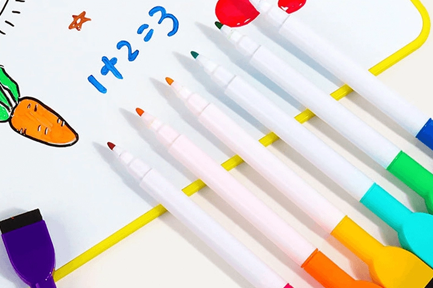
The Whiteboard Pen presents a chemical challenge: erasure. The ink must adhere to the board clearly but release easily when wiped. The key QC focus is solvent balance. Tests involve writing on a standard whiteboard surface and leaving the ink for 30+ days. Upon erasing, the ink should turn to dust rather than smearing. If a "ghost" image remains, the solvent formulation is incorrect, marking a failure in the manufacturing process.
For high-end metal ballpoints, the challenges are leakage and smoothness. Premium manufacturers often employ pressurized ink chambers, similar to technology developed for spaceflight, allowing the pen to write at odd angles. Furthermore, the ball housing must undergo corrosion resistance testing to ensure the ink's pH does not degrade the metal tip over time.
Investing in higher-quality writing instruments often carries a higher upfront cost, but the return on investment (ROI) becomes clear when analyzing the Total Cost of Ownership (TCO) and brand impact.
For corporate buyers, a pen is often a brand ambassador. A logo-branded pen that leaks, breaks, or fails to write is a liability. It subtly communicates a message of low quality and lack of attention to detail. High QC standards protect the gifting company's image, ensuring that the promotional item reflects the reliability of the brand it represents.
The "Throwaway Economy" is increasingly scrutinized. Premium pens are designed not as disposable items, but as vessels for standard refills (such as Parker G2 style or Schmidt systems). From a cost-benefit perspective, a machined metal pen housing lasts decades. The user only needs to purchase consumable ink replacements. This shifts the expenditure from frequent replacement of cheap plastic pens to a one-time investment in a durable tool.
A reliable Premium Pen Manufacturer is characterized by transparency. Buyers should evaluate suppliers based on their willingness to share defect rates and warranty terms. A major red flag is a manufacturer who cannot specify the origin of their ink (e.g., distinguishing between German Dokumental ink and generic bulk ink) or the composition of their tips. Transparency in the supply chain is the surest sign of quality assurance.
When evaluating samples from a new supplier, you do not need a laboratory to perform an initial quality assessment. A systematic desktop audit can reveal 90% of potential issues.
The Shake Test: Shake the pen vigorously. You should hear silence. Any internal rattling indicates loose tolerances between the refill and the barrel or poorly fitted springs.
The Cap Seal: Cap and uncap the pen. Listen for a distinct, audible "click" or feel for a smooth, progressive resistance. This tactile feedback confirms the seal is tight enough to prevent the ink from drying out.
The Start-Up: Leave the pen uncapped for 24 hours (if it is a ballpoint) or a few minutes (if it is a fiber tip), then attempt to write. A premium pen should write immediately with zero millimeters of lag.
The Drag Test: Write on low-quality, fibrous paper. A poorly polished tip will catch on the fibers, feeling scratchy. A premium tip will glide over the surface regardless of the paper grade.
Surface Inspection: Examine the finish under a bright light. Look for "orange peel" texture on lacquer finishes or tiny bubbles on plated clips. These surface imperfections indicate a lack of control in the finishing process.
Beyond performance, safety certification is non-negotiable. If you are sourcing Watercolor Pens or products accessible to children, check for EN71-3 compliance, which regulates the migration of certain elements (heavy metals). Additionally, look for ASTM D-4236 certification, which relates to the labeling of hazardous art materials.
Quality control is the invisible feature that dictates the user experience. Whether selecting Fineliner Pens for technical drafting or gold-plated ballpoints for executive gifts, the manufacturing process determines the product's true value. A pen is more than a plastic tube with ink; it is a complex assembly requiring precise chemistry and mechanical engineering.
True premium status is earned through rigorous testing, material science, and mechanical precision—not just a high price tag. By understanding the "QC Gauntlet" and knowing how to inspect a sample for tolerance stacking and material integrity, buyers can make informed decisions that protect their brand reputation.
When sourcing pens, request detailed QC reports and material certifications to ensure your investment delivers a flawless writing experience. Do not settle for "good enough"; demand the engineering standards that define true quality.
A: The primary difference lies in materials and tolerances. Premium tips use Tungsten Carbide balls sintered at extremely high temperatures (around 1400°C), making them resistant to deformation. Standard tips often use softer steel, which can wear down or deform, leading to skipping and blobbing. Additionally, premium tips are machined to tighter tolerances, ensuring a consistent gap for ink flow.
A: Manufacturers rely on advanced cap engineering and ink chemistry. The cap must form an airtight seal, often verified against ISO standards, to prevent evaporation. Furthermore, the ink formulation includes humectants—additives that retain moisture—allowing the pen to remain uncapped for short periods without the tip drying out or clogging.
A: Premium pens often utilize solid brass or stainless steel for the barrel construction, rather than lightweight injection-molded plastic. This added weight is intentional; it is engineered to provide better balance and ergonomics. The weight helps the pen rest naturally in the hand, reducing the need for downward pressure while writing.
A: Look for ISO 9001 certification, which indicates a robust Quality Management System. For product safety, specifically regarding chemicals and heavy metals, look for EN71 (European standard) and ASTM D-4236 (US standard). These certify that the materials used are non-toxic and safe for consumer use.
A: Yes. A premium Whiteboard Pen is defined by its ink formulation and tip durability. It should deliver high-density color that is easily visible from a distance. Crucially, the ink must contain a balanced solvent ratio that turns to dust upon erasing, preventing "ghosting" or permanent stains on the whiteboard surface, even after being left for days.