Views: 0 Author: Site Editor Publish Time: 2025-08-20 Origin: Site
In the realm of arts and crafts, the Glue Pen has emerged as a versatile tool, offering precision and ease of use. This article delves into the mechanics of activating a glue pen, exploring its applications, benefits, and the science behind its adhesive properties. For those new to this tool, understanding its functionality can significantly enhance crafting projects. The Glue Pen is not just a simple adhesive; it is a gateway to creativity, enabling users to execute intricate designs with finesse.
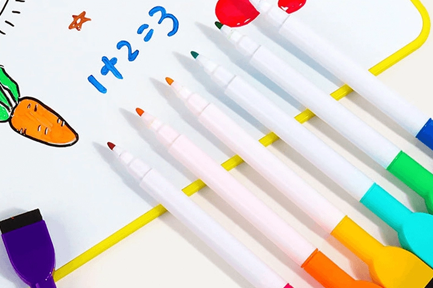
The glue pen is a modern adhesive tool designed for precision and ease of use. Unlike traditional glue sticks or bottles, it allows for controlled application, making it ideal for detailed work. The pen-like design ensures that users can handle it comfortably, much like a writing instrument. This ergonomic advantage is particularly beneficial for prolonged use, reducing hand fatigue and increasing accuracy.
The adhesive used in glue pens is typically a water-based formula, which is non-toxic and safe for use by children and adults alike. This makes it a popular choice in educational settings, where safety is paramount. Additionally, the water-based nature of the adhesive means that it is easy to clean up, requiring only water to remove any excess glue.
A glue pen comprises several key components that work together to deliver its adhesive properties. These include the barrel, the adhesive reservoir, the applicator tip, and the cap. The barrel is typically made of plastic and houses the adhesive reservoir. The reservoir contains the glue, which is dispensed through the applicator tip when pressure is applied. The tip is designed to allow for precise application, ensuring that the glue is applied exactly where it is needed. The cap serves to protect the tip and prevent the glue from drying out when not in use.
Activating a glue pen is a straightforward process, yet it requires attention to detail to ensure optimal performance. Begin by removing the cap, which protects the applicator tip. Some glue pens may have a seal that needs to be broken before use; this is typically a small plastic or foil covering over the tip. Once the seal is removed, gently squeeze the barrel to prime the adhesive. It is important to apply consistent pressure to avoid any sudden spurts of glue, which can lead to mess and wastage.
Once the adhesive begins to flow, test the pen on a scrap piece of paper to ensure a smooth and even application. This step is crucial as it helps to regulate the flow of glue and prevents any potential mishaps during the actual project. If the glue does not flow smoothly, check the tip for any blockages and clear them as necessary.
To maximize the effectiveness of a glue pen, consider the following tips:
Store the glue pen with the cap securely fastened to prevent the adhesive from drying out.
Use the pen in a well-ventilated area to ensure the adhesive dries quickly and effectively.
Apply the glue in thin layers for a stronger bond and to reduce drying time.
Keep the applicator tip clean by wiping it with a damp cloth after each use.
Glue pens are incredibly versatile and can be used in a variety of applications. They are particularly popular in the world of arts and crafts, where precision is key. Whether it's scrapbooking, card making, or model building, a glue pen provides the control needed to apply adhesive in tight spaces and intricate designs.
In addition to crafting, glue pens are also used in educational settings. Teachers and students alike benefit from the ease of use and safety features of glue pens, making them ideal for classroom projects. The non-toxic formula ensures that even young children can use them without risk, promoting creativity and learning in a safe environment.
Beyond traditional applications, glue pens have found their way into innovative uses. For instance, they are used in the fashion industry for attaching embellishments to fabrics. The precision of the glue pen allows designers to apply rhinestones, sequins, and other decorative elements with ease, creating intricate patterns and designs.
Moreover, glue pens are used in the tech industry for assembling small electronic components. The precise application of adhesive ensures that components are securely attached without the risk of damaging sensitive parts. This application highlights the versatility and reliability of glue pens in various industries.
The effectiveness of a glue pen lies in its adhesive properties, which are the result of complex chemical interactions. The adhesive is typically a polymer-based formula, which provides a strong bond when applied to surfaces. Polymers are large molecules composed of repeating subunits, and their structure allows them to form strong intermolecular forces with surfaces, resulting in adhesion.
When the adhesive is applied, it undergoes a process called curing, where it transitions from a liquid to a solid state. This process is facilitated by the evaporation of water, which is a key component of the adhesive formula. As the water evaporates, the polymers form a network of bonds, creating a strong adhesive layer.
Several factors can affect the adhesion properties of a glue pen. These include the surface energy of the materials being bonded, the temperature and humidity of the environment, and the thickness of the adhesive layer. High surface energy materials, such as metals and glass, tend to form stronger bonds with adhesives compared to low surface energy materials like plastics.
Temperature and humidity also play a crucial role in the curing process. High temperatures can accelerate the evaporation of water, leading to faster curing times. However, excessive heat can also cause the adhesive to become brittle, reducing its effectiveness. Similarly, high humidity levels can slow down the evaporation process, resulting in longer curing times.
The glue pen is a remarkable tool that combines precision, ease of use, and safety. Its applications span across various industries, from arts and crafts to technology, highlighting its versatility. Understanding the mechanics of activating a glue pen and the science behind its adhesive properties can enhance its effectiveness and broaden its uses. For those interested in exploring the potential of this tool, the Glue Pen offers endless possibilities for creativity and innovation.
1. What is the primary use of a glue pen?
The primary use of a glue pen is for precision adhesive application in arts and crafts, educational projects, and even in some industrial applications.
2. How do you activate a glue pen?
To activate a glue pen, remove the cap, break any seal over the tip, and gently squeeze the barrel to start the flow of adhesive.
3. Are glue pens safe for children?
Yes, most glue pens use a non-toxic, water-based adhesive, making them safe for children to use under supervision.
4. Can glue pens be used on all surfaces?
Glue pens work best on paper, cardboard, and some fabrics. They may not adhere well to non-porous surfaces like glass or metal.
5. How should a glue pen be stored?
Store a glue pen with the cap securely fastened in a cool, dry place to prevent the adhesive from drying out.
6. What factors affect the adhesion of glue pens?
Factors such as surface energy, temperature, humidity, and adhesive layer thickness can affect the adhesion properties of glue pens.
7. Are there innovative uses for glue pens?
Yes, glue pens are used in fashion for attaching embellishments and in technology for assembling small electronic components.