
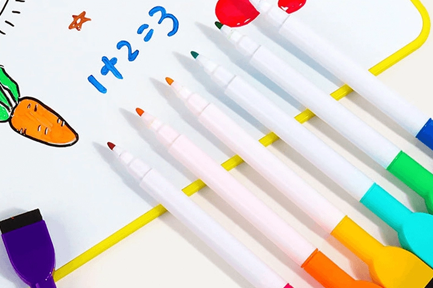


For procurement teams in the textile and garment industries, sourcing reliable marking tools is a critical requirement. An erasable sewing pen leaves temporary guidelines on textiles, effortlessly removed once cutting or stitching is complete. Unlike traditional tailor’s chalk, which can rub off prematurely or leave dusty residues, a high-quality erasable pen offers precision, consistency, and cleanliness.
Partnering with an established manufacturer like TWOHANDS ensures consistent quality and reliable supply chains. Buyers can learn more about us to understand how specialized manufacturing capabilities translate into superior products. For B2B wholesale buyers and distributors, stocking these pens represents a high-turnover consumable category with strong margins, driven by continuous demand from industrial manufacturers and retail fabric stores.
Commercial role in sewing, fabric processing, and garment manufacturing
In commercial settings, the erasable sewing pen is an indispensable utility for transitioning designs from pattern to product. Garment factories utilize these markers to indicate darts, pleats, buttonholes, and cutting lines on bulk fabric layers. In fabric processing, temporary markings guide embroiderers and machinists without permanently altering the textile. The continuous need for these tools in high-volume production guarantees steady reorder rates for distributors.
How water-erasable marking supports accuracy, efficiency, and waste reduction
The chemical formulation of water-erasable ink allows operators to draw sharp, highly visible lines that hold up to handling friction, yet disappear completely upon contact with water. This dramatically improves manufacturing accuracy. By eliminating the risk of permanent ink stains or chalk smudges that ruin expensive textiles, garment manufacturers significantly reduce scrap rates and material waste, directly improving bottom-line profitability.
Market positioning for wholesale, distribution, and private label
From a wholesale perspective, the erasable sewing pen occupies a lucrative niche between industrial supplies and consumer haberdashery. Distributors can market these pens to large-scale apparel factories in bulk or package them in smaller blister cards for retail craft stores. The product's straightforward manufacturing process makes it an excellent candidate for private label (OEM) programs, allowing B2B buyers to build brand equity in the textile accessories market.
What Product Specifications Should Buyers Review When Sourcing an Erasable Sewing Pen?
When evaluating suppliers, procurement professionals must scrutinize the technical specifications of the erasable sewing pen to ensure it meets the rigorous demands of textile production. A pen that fails to write smoothly or permanently stains fabric can cause catastrophic losses for garment manufacturers. Therefore, understanding the engineering behind the tip and ink is paramount.
Buyers should source products that adhere to strict manufacturing tolerances. Core components—specifically the nib material, ink formulation, and barrel design—dictate the pen's performance, shelf life, and end-user satisfaction.
Tip performance: 1.0 acrylic tip, line visibility, and marking control
The industry standard for optimal fabric marking is the 1.0 acrylic tip. Unlike softer felt tips that can fray when dragged across coarse textiles, a 1.0mm acrylic tip maintains structural integrity, delivering a consistent, unbroken line. This specific size provides the perfect balance between line visibility for machine operators and precise marking control for intricate pattern details.
Ink system: water-based ink and water-removable fabric marks
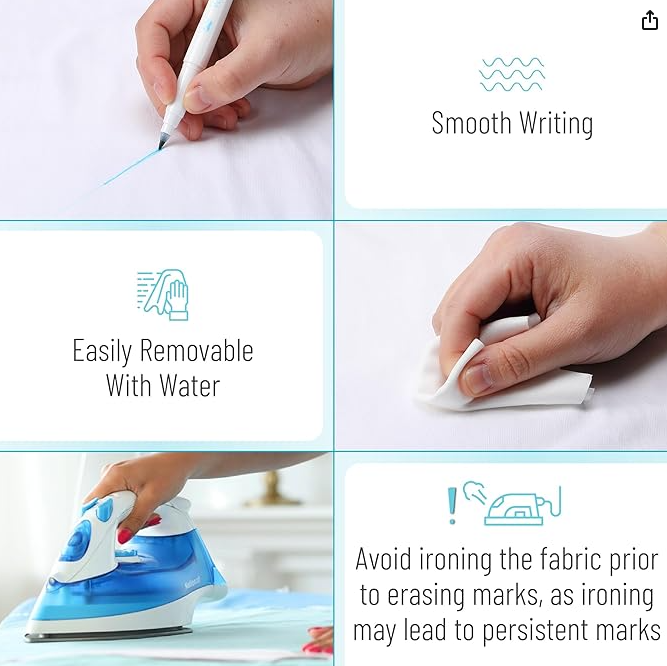
The critical technology within an erasable sewing pen is its water-based ink system. This specialized ink is engineered to bond temporarily with fabric fibers. Once the marking is no longer needed, it disappears rapidly when exposed to water—either through a damp cloth, a spray bottle, or the final garment washing process. This ensures no chemical residue is left behind on finished apparel.
Application scope: hand sewing, fabric processing, apparel manufacturing, and cutting lines
A versatile 1.0 acrylic tip pen is engineered for a broad application scope. It is equally effective for delicate hand sewing projects, heavy-duty fabric processing, and large-scale apparel manufacturing. Factory workers rely on these pens to draw clear cutting lines and alignment marks on a variety of substrates, from lightweight cottons to heavy denims, ensuring standardized production across different textiles.
Core selling points: clear marking, fast water removal, and sewing convenience
When pitching these tools to end-users, distributors should emphasize core selling points: highly clear marking that resists dry friction, fast water removal that accelerates production workflows, and overall sewing convenience. The ability to seamlessly draw a line, cut the fabric, and instantly erase the mark with a spritz of water streamlines the entire apparel fabrication process.
How Should Importers Compare Erasable Sewing Pen Options Across Suppliers?
Navigating the global market for marking tools requires a systematic approach to supplier evaluation. Importers must look beyond unit price and analyze the total value proposition, including product durability, ink reliability, and customization capabilities. Comparing a specialized textile pen to a standard paint marker highlights the unique chemical requirements of fabric marking.
A structured comparison helps procurement teams filter out substandard manufacturers who may use generic, non-erasable inks disguised as textile markers. By standardizing criteria, buyers can objectively rank potential factory partners.
| Evaluation Metric | Substandard Supplier | Premium Supplier (e.g., TWOHANDS) |
|---|---|---|
| Tip Material | Fragile felt, prone to fraying | Durable 1.0 acrylic tip |
| Ink Formulation | Generic dye, leaves ghost marks | Specialized water-based, 100% erasable |
| Cap Seal | Loose fit, leads to premature drying | Airtight snap-cap, extends shelf life |
| Batch Consistency | Variable color and erase times | Uniform performance across all lots |
Comparison criteria: tip material, tip size, ink type, erase performance, and packaging
Importers should demand detailed specification sheets outlining the tip material (preferably acrylic), tip size (1.0mm is ideal), and specific water-based ink type. Erase performance must be quantified: how much water is required, and how quickly does the mark vanish? Additionally, evaluating packaging durability and presentation is essential for retail-bound inventory.
Quality checks: mark clarity, ink consistency, cap seal, shelf stability, and batch uniformity
Rigorous quality checks form the backbone of a successful sourcing program. Buyers must test mark clarity on multiple fabric swatches, verify ink consistency to prevent skipping, and inspect the cap seal to ensure water-based ink does not evaporate. Shelf stability and batch uniformity are critical to prevent dead stock in distribution centers.
OEM considerations: logo printing, color assortment, barcode labeling, and packaging format
For buyers pursuing a private label strategy, OEM capabilities are a major deciding factor. Suppliers must demonstrate proficiency in custom logo printing on the pen barrel, offering a reliable color assortment (typically blue, white, and pink for different fabric shades), accurate barcode labeling for inventory management, and flexible packaging formats tailored to B2B or B2C channels.
Which Compliance, Testing, and Quality Assurance Questions Should Buyers Ask?

Regulatory compliance and safety are non-negotiable when importing chemical-based goods like markers. Even though an erasable sewing pen is an industrial tool, its water-based ink must adhere to international safety standards to protect factory workers and end-users.
Procurement teams must ask targeted questions regarding material safety data sheets (MSDS) and third-party testing reports. Failure to secure these documents can result in customs delays or costly product recalls.
Product safety and material disclosure for water-based ink and pen components
Buyers must mandate full material disclosure from suppliers. The water-based ink formulation must be certified non-toxic and free from restricted heavy metals or volatile organic compounds (VOCs). Standard certifications to look for include EN71 (for European markets) and ASTM D-4236 (for the US market), ensuring pen components and inks are safe for prolonged handling.
Performance testing: fabric visibility, water removal, storage durability, and transit resistance
Quality assurance requires documented performance testing. This includes verifying fabric visibility under factory lighting and confirming that water removal is absolute. Furthermore, pens must undergo accelerated aging tests to prove storage durability, and transit resistance tests (such as temperature cycling) to ensure ink does not leak or freeze during ocean freight.
Risk control: staining claims, fabric limitations, user instructions, and batch traceability
To mitigate liability, buyers must implement strict risk control measures. Suppliers should provide clear guidelines on fabric limitations, as certain synthetic blends or pre-treated textiles may react unpredictably with water-erasable inks. Accurate user instructions must be printed on packaging, and rigorous batch traceability must be maintained to isolate and recall defective production runs if staining claims arise.
How Do Packaging, Logistics, and Channel Strategy Affect Margins?
The physical movement and presentation of the erasable sewing pen significantly impact overall profitability. Because pens are relatively lightweight but require protection against drying out, optimizing packaging and logistics is crucial for maintaining margins.
A well-planned channel strategy dictates how the product is packaged. Whether pens are destined for an industrial warehouse or a retail shelf, the packaging format must align with the end-user's purchasing habits while maximizing shipping container utilization.
Packaging formats: bulk cartons, inner boxes, mixed assortments, and ecommerce packs
Packaging formats must be tailored to the sales channel. Bulk cartons of 1,000 loose units are ideal for direct-to-factory sales. Inner boxes of 12 or 24 units suit wholesale distributors supplying local haberdasheries. Mixed color assortments in blister cards or specialized ecommerce packs (optimized for flat shipping) are necessary for online retail success.
Logistics factors: carton efficiency, leakage prevention, exposure control, and inventory rotation
Logistics planning must prioritize carton efficiency to minimize freight costs per unit. Packaging must provide leakage prevention through secure cap designs and proper horizontal orientation during transit. Exposure control against extreme heat or cold is vital to protect the water-based ink, and strict First-In-First-Out (FIFO) inventory rotation is required to manage the product's shelf life effectively.
Channel strategy: distributors, industrial sewing suppliers, fabric stores, and garment factories
Defining a clear channel strategy helps buyers allocate inventory efficiently. Industrial sewing suppliers and garment factories prioritize bulk pricing and consistent ink performance over packaging aesthetics. Conversely, retail fabric stores and craft distributors require visually appealing, barcoded packaging that clearly communicates the pen's 1.0 acrylic tip and fast water-removal selling points to the end consumer.
What Practical Buying Steps Help Procurement Teams Select the Right Supplier?

Transitioning from market research to active procurement requires a disciplined workflow. Buyers must systematically filter suppliers, validate product claims, and negotiate terms that protect their commercial interests. Much like sourcing an acrylic paint marker, sourcing a textile marker demands attention to chemical performance and tip durability.
By following a standardized sourcing checklist, procurement teams can confidently select a manufacturing partner that delivers consistent quality, scalable production, and competitive pricing.
Sourcing workflow from requirements to pilot order, bulk production, and repeat purchasing
The sourcing workflow begins with drafting a detailed technical specification (e.g., 1.0 acrylic tip, water-based ink). This is followed by requesting quotes, evaluating samples, and placing a small pilot order to test market reception and factory reliability. Once the pilot is successful, buyers can confidently move to bulk production contracts and establish automated repeat purchasing schedules.
Decision checklist: specification fit, test results, compliance, MOQ, and landed cost
A robust decision checklist ensures no critical factors are overlooked. Procurement teams must verify the specification fit against initial requirements, review independent test results for water-removal efficacy, and confirm regulatory compliance. Finally, they must calculate the total landed cost—factoring in unit price, MOQ, freight, and tariffs—to ensure the program meets internal margin targets.
Key takeaways for commercial, technical, and sourcing evaluation
The key takeaways for successful procurement involve balancing technical superiority with commercial viability. Technically, the 1.0 acrylic tip and water-based ink are non-negotiable for fabric marking. Commercially, clear communication, robust QA protocols, and strategic logistics planning are the differentiators that transform a simple writing instrument into a highly profitable B2B product line.
Key Takeaways
- Wholesale sourcing and supply-chain implications for Erasable Sewing Pen
- Specifications, compliance, and commercial terms buyers should validate
- Actionable recommendations for distributors and procurement teams
