Views: 0 Author: Site Editor Publish Time: 2025-05-22 Origin: Site
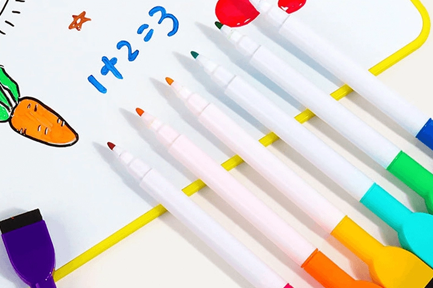
The chalk marker has emerged as a versatile tool in various industries, bridging the gap between traditional chalk and modern marker technology. Its unique properties make it suitable for educational settings, creative arts, and professional presentations. This article delves into the science, applications, and innovations of chalk markers, offering a comprehensive understanding of their impact on contemporary practices.
Unlike conventional chalk, chalk markers provide vibrant colors and clean lines without the dust residue, enhancing both functionality and user experience. The evolution of the chalk marker reflects advancements in material science and a growing demand for efficient writing instruments.
Chalk markers are composed of water-based ink containing pigment particles suspended in a liquid medium. This composition allows for smooth application on non-porous surfaces and easy wipe-off capabilities. The pigments used are finely ground to ensure consistent flow through the marker tip, resulting in precise and vivid markings.
The mechanism of a chalk marker involves capillary action, where the ink is drawn to the tip through a fiber reservoir system. This design ensures a steady release of ink, preventing leaks and promoting longevity. Research indicates that the particle size distribution within the ink significantly affects the marker's performance, influencing factors like color intensity and drying time.
Traditional chalk is composed mainly of calcium carbonate and often produces dust when used. This dust can pose health risks and maintenance challenges in indoor environments. In contrast, chalk markers eliminate dust production, offering a cleaner alternative without compromising on visibility or ease of use.
Moreover, chalk markers provide a broader color spectrum due to the variety of pigments available. This diversity enhances creative expression and allows for more engaging visual displays in educational and professional contexts.
The versatility of chalk markers has led to their adoption across multiple sectors. Their ability to write on various surfaces, such as glass, metal, and plastic, expands their utility beyond traditional blackboards.
In classrooms, chalk markers have revolutionized the way educators present information. The clarity and brightness of the markings enhance student engagement and facilitate better understanding. Furthermore, the ease of erasure allows for dynamic lesson adjustments without the mess associated with traditional chalk.
Studies have shown that visual stimuli significantly improve learning retention. The use of colorful chalk marker illustrations can aid in concept comprehension and memory recall.
In corporate environments, chalk markers are utilized for presentations, brainstorming sessions, and strategic planning. Their ability to produce easily modifiable displays makes them ideal for collaborative workspaces. Additionally, they are used in retail for creating eye-catching signage that can be updated regularly to reflect promotions or new products.
The non-permanent nature of chalk markers allows businesses to maintain flexibility in their messaging while ensuring professional aesthetics.
Artists and crafters have embraced chalk markers for their ability to produce vivid designs on a variety of surfaces. From DIY home decor to elaborate window art, the markers offer a medium that combines ease of use with artistic versatility.
For instance, chalk markers are ideal for creating temporary murals or seasonal decorations, as they can be removed without damaging the underlying surface. This quality encourages experimentation and innovation in artistic expression.
Effective use of chalk markers involves understanding the appropriate techniques to maximize their potential. Proper surface preparation and marker maintenance are crucial for optimal performance.
Chalk markers perform best on non-porous surfaces such as glass, metal, and sealed chalkboards. Before application, surfaces should be cleaned to remove dust and oils that may interfere with adhesion. This ensures crisp lines and reduces the likelihood of smudging.
Testing the marker on a small area can help ascertain compatibility and prevent potential damage to the surface.
To prolong the life of a chalk marker, it is important to recap it tightly after use to prevent the ink from drying out. Storing markers horizontally can help maintain even ink distribution. If a marker appears dry, shaking it with the cap on and gently depressing the tip can reactivate the ink flow.
Regular maintenance not only extends the marker's lifespan but also ensures consistent performance during use.
Artists can experiment with layering colors to achieve gradient effects and blending. Using different tip sizes allows for varied line widths, enhancing detail in designs. Additionally, incorporating stencils can assist in creating intricate patterns and shapes with precision.
Understanding the drying time of the ink is essential when working with multiple colors to prevent smearing and achieve clean overlays.
Recent advancements in chalk marker technology have focused on enhancing the user experience and expanding functionality. Innovations include the development of neon and metallic inks, providing greater diversity in visual effects.
Environmental considerations have led manufacturers to develop non-toxic, low-odor inks. Water-based formulations minimize the ecological impact and improve safety for users, especially in educational settings where children are present.
For instance, some brands have introduced refillable chalk markers, reducing waste and promoting sustainable practices.
The integration of chalk markers with digital technology has led to the creation of smart boards that combine traditional writing with interactive capabilities. This fusion allows for content to be saved electronically and shared, enhancing collaboration and efficiency.
Such innovations represent the ongoing evolution of writing instruments in response to technological advancements and user needs.
Chalk markers have significantly impacted various fields by offering a versatile and efficient alternative to traditional writing tools. Their unique properties cater to the demands of modern education, business, and art, fostering creativity and effective communication. As technology progresses, the chalk marker is poised to incorporate further innovations, maintaining its relevance in an ever-changing landscape.
Understanding the science behind chalk markers and mastering their applications can greatly enhance one's ability to utilize them effectively. Whether in a classroom, boardroom, or art studio, these tools offer endless possibilities for expression and interaction.