


A single inaccurate mark can throw off a seam, distort a dart, or leave a visible stain on fabric you spent hours preparing. For hand sewists, marking is not a minor step—it is the blueprint for every stitch that follows. Erasable sewing pens offer a cleaner, more precise alternative to dusty chalk and bleeding fabric markers, especially when projects demand narrow lines and controlled removal. This guide explains how these pens work, why a fine 0.7mm line can improve accuracy, and how to test ink safely before using it on silk, cotton, quilting blocks, or intricate embroidery layouts.
Why Erasable Sewing Pens Matter
I used to dread the marking phase of hand-sewing projects. You spend hours meticulously pinning a bespoke garment or measuring a complex quilt block, only to ruin delicate silk with a clumsy, stubborn smudge of tailor's chalk. If you have ever struggled with intricate embroidery or precision tailoring, you know this frustration. Discovering the erasable sewing pen completely changes the game, bringing the ease of drafting on paper straight to your fabric stash.
What an Erasable Sewing Pen Is
At its core, an erasable sewing pen is a precision marking tool loaded with thermo-sensitive, water-soluble, or friction-reactive gel ink. Instead of relying on messy powders or thick felt tips, these pens typically feature a fine 0.7mm rollerball tip, which is ideal for achieving razor-sharp accuracy on woven materials. The ink flows smoothly, much like a standard writing pen, but with a crucial twist: mistakes are easily fixed without scrapping or scrubbing the fabric. You simply erase the temporary line using a built-in friction eraser, a damp cloth, or a quick blast of heat, saving time and eliminating the need for harsh corrections.
When Pens Beat Chalk or Fabric Markers
Traditional tailor's chalk leaves a dusty, unstable line that can easily exceed 2.0mm to 3.0mm in width. When you are trying to hand-stitch a precise 1.5cm seam allowance, a 3mm chalk line creates a massive margin of error. Furthermore, standard fabric markers are notorious for bleeding through lightweight cottons, often leaving a noticeable ghosting effect. An erasable pen beats these older methods by offering the smooth, uninterrupted glide of a standard writing instrument. It leaves a crisp 0.7mm line that vanishes on command without distorting the textile.
How to Use an Erasable Sewing Pen
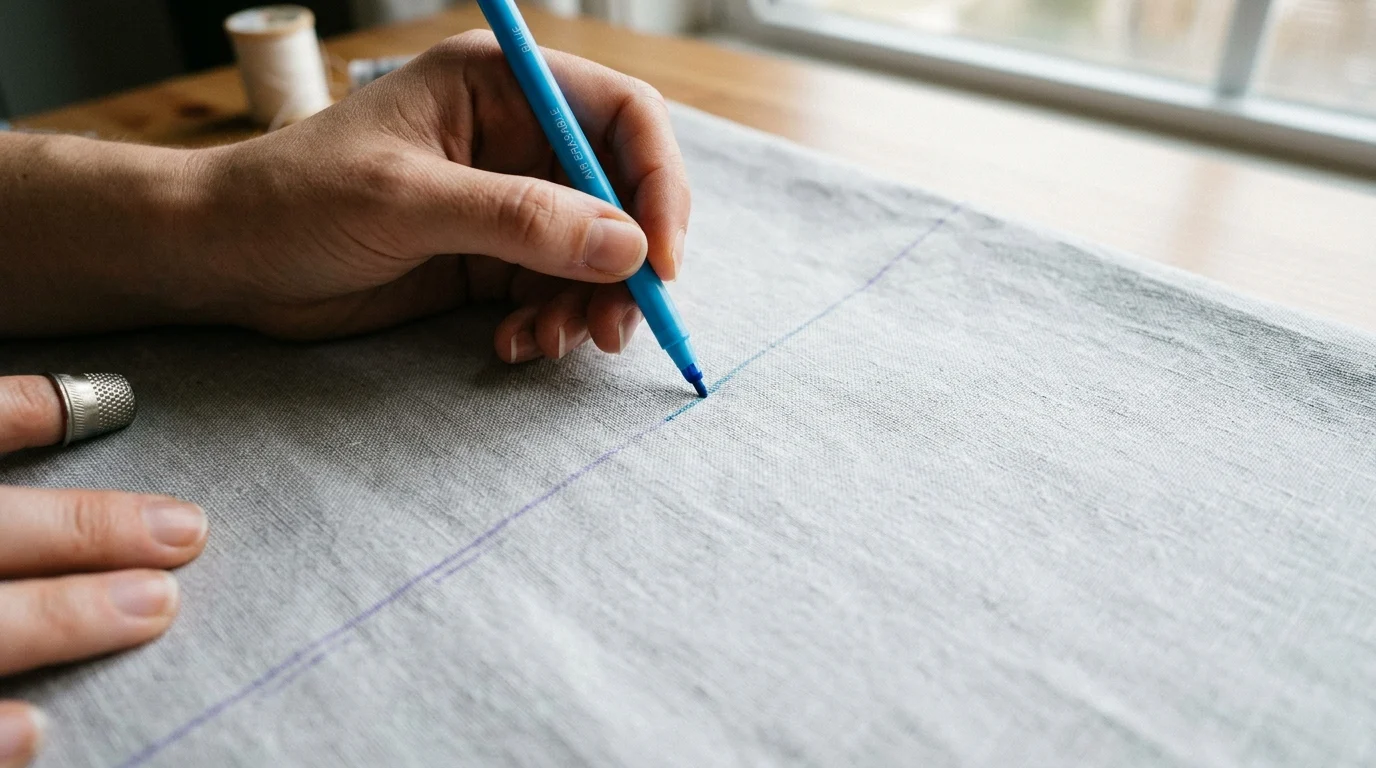
Getting your hands on a marking pen is only half the battle; knowing how to wield it without permanently marking your fabric is where the real skill lies. A systematic approach to marking patterns starts with trusting the tool, but you must always verify the fabric's reaction before your needle touches the cloth.
Steps for Marking Seams, Darts, and Pleats
When marking complex darts, knife pleats, or sashiko embroidery grids, precision is non-negotiable. Start by laying the fabric completely flat and taut on a cutting mat. Using a heavy acrylic ruler, apply light, even pressure with the pen to draw your lines, ensuring the gel ink flows without snagging the delicate weave. The golden rule is to always test on a 5cm by 5cm scrap first. Draw a heavy line, leave the mark to set for a full 24 hours, and then remove it according to the pen's instructions (such as pressing it with an iron at 60°C/140°F for thermo-sensitive ink). This validates that the ink vanishes cleanly without leaving a bleached shadow or chemical residue on that specific dye lot.
How to Compare Erase Method and Line Width
Not all erasable pens disappear the same way, and matching the erase method to your fabric is a critical step. Aggressive friction erasing, for example, can easily warp bias-cut silk. Here is a breakdown of the different options:
| Pen Type | Erase Method | Typical Line Width | Best Fabric Match | Removal Temp/Time |
|---|---|---|---|---|
| Thermo-sensitive | Iron / Heat Gun | 0.7mm | Cottons, Linens | 60°C (140°F) |
| Water-soluble | Damp Sponge | 1.0mm | Washable blends | Instant on contact |
| Air-erasable | Evaporation | 0.5mm - 1.0mm | Quick 24h projects | 24 to 72 hours |
| Friction-erasable | Built-in Eraser | 0.7mm | Sturdy canvas | N/A (Mechanical) |
For hand-sewing delicate, non-washable garments, the thermo-sensitive option is usually best. A quick three-second hover with a hot iron clears the marks instantly without requiring any physical abrasion.
When to Choose an Erasable Sewing Pen
While you might be ready to ditch your old marking tools, it is important to remember that an erasable sewing pen is not a universal cure-all. Knowing exactly when to deploy this precision instrument—and when to leave it in the drawer—is what separates enthusiastic amateurs from seasoned hand-sewing veterans.
Key Decision Criteria for Hand Sewing
The decision process starts with evaluating the fabric's texture and the project's environmental destiny. On a heavily textured wool sweater or a loosely woven boucle, a 0.7mm rollerball mark might simply get lost in the fibers, making a traditional tailor's tack a much better choice. Temperature is another crucial factor. Thermo-sensitive inks typically turn invisible at 60°C (140°F), but there is a catch: the chemical reaction can reverse, causing lines to reappear if the garment is exposed to temperatures below -10°C (14°F). When tailoring a winter coat meant for a snowy climate, avoid heat-erasable pens to prevent hidden construction lines from magically resurfacing in the cold.
How to Pick the Right Pen for Your Project
When stocking a studio, analyze the longevity and cost-efficiency of your marking supplies. Because these specialized gel inks tend to dry out faster than standard ballpoints, it is important to monitor their shelf life, which usually caps at around 12 to 18 months. To optimize your budget, consider buying them in sensible bulk quantities, looking for suppliers that offer a manageable Minimum Order Quantity (MOQ) of 12 to 24 units.
Key Takeaways
- Use an erasable sewing pen when you need a fine 0.7mm guide line for accurate hand stitching, darts, pleats, or embroidery grids.
- Choose erasable pens over tailor’s chalk when a 2.0mm to 3.0mm chalk line could create too much error on precise seam allowances.
- Test every pen on a 5cm by 5cm fabric scrap, leave the mark for 24 hours, and confirm it erases cleanly before sewing.
- Match the erasing method to the fabric by checking whether the pen is heat-sensitive, water-soluble, or friction-reactive.
- For thermo-sensitive ink, follow the pen instructions carefully and use controlled heat, such as about 60°C/140°F, to avoid damaging fabric.
![]()
Frequently Asked Questions
What is an erasable sewing pen?
An erasable sewing pen is a fabric marking tool that uses removable ink, often heat-sensitive, water-soluble, or friction-reactive. It creates fine temporary lines for seams, darts, pleats, embroidery grids, and quilting layouts.
Why is an erasable sewing pen better than tailor’s chalk?
A typical erasable pen makes a fine 0.7mm line, while chalk can leave a dusty 2.0mm to 3.0mm mark. That difference matters when marking precise seam allowances, darts, or detailed hand-stitching patterns.
Should I test an erasable sewing pen before using it?
Yes. Always test on a 5cm by 5cm fabric scrap first. Mark it heavily, wait 24 hours, then erase according to the pen instructions to check for ghosting, residue, or color changes.
How do you remove erasable sewing pen marks?
Removal depends on the pen type. Some marks vanish with heat, such as an iron at about 60°C/140°F, while others erase with friction or a damp cloth. Always follow the pen’s specific instructions.
Can erasable sewing pens be used on delicate fabrics?
They can be useful on delicate fabrics, but testing is essential. Lightweight cotton, silk, and dyed fabrics may react differently, so verify that the ink disappears cleanly before marking the final project.
